Anorak

Breaking Media, Politicians & Celebrities Since 1995

Tabloid news for broadsheet readers

HOME | FORUMS | Tabloids/Broadsheets | Strange But True | Royal Family | Race For The White House | Magazines | Celebrity | Madeleine McCann | Politics | Backpages | Casino/Poker | Twitterings | Anorak TV | Global Warming | War On Terror | Money | Immigration | Anorak People | ABOUT/CONTACT

‘Credit Crunch’

The economy is changing, the credit cruch is heading your way

August 24th, 2008 | Opinions? : Add your view now! | In: Broadsheets, Credit Crunch, Money, Photojournalism

Earth Moves For British Economy

credit-crunch Earth Moves For British Economy

FEEL that seismic shift? That was the British economy coming to a halt.

INDEPENDENT: “British economy grinds to halt.”
FT: “British economy shudders to a halt”.
TELEGRAPH: British economy “shudders to a halt”.

Did you feel it? Did the Earth move for you..?

Share and Enjoy:
  • Digg
  • Sphinn
  • del.icio.us
  • Facebook
  • Mixx
  • Google
  • Technorati
  • Furl
  • Reddit
  • StumbleUpon

Beat The Credit Crunch With Laughing Gas

laughing-gas1 Beat The Credit Crunch With Laughing Gas“WE’LL pay your gas bill for a year,” says the Express

The pledge is illustrated by a picture of a middle-aged woman beaming. Is the gas in questions nitrous oxide?

If it is, we say bring it on.

A flick of the gas taps and a good laugh will warm us up a treat. It’s the Blitz spirit…

Share and Enjoy:
  • Digg
  • Sphinn
  • del.icio.us
  • Facebook
  • Mixx
  • Google
  • Technorati
  • Furl
  • Reddit
  • StumbleUpon

Credit Crunch: The Rover’s Returns

credit-crunch1 Credit Crunch: The Rovers Returns CREDIT Crunch Watch: Anorak’s look at credit crunch in the news:

“Even TV stars are feeling the pinch: Troubled Corrie star Bev Callard pulled pints at the Rover’s yesterday – as her real-life boozer suddenly shut down. Locals say the unexpected closure of the Gallery, an upmarket bar and restaurant, is probably down to the credit crunch”The Sun

What the credit crunch means to you…

Share and Enjoy:
  • Digg
  • Sphinn
  • del.icio.us
  • Facebook
  • Mixx
  • Google
  • Technorati
  • Furl
  • Reddit
  • StumbleUpon

Credit Crunch: The Sunday Joint

credit-crunch-150x150 Credit Crunch: The Sunday JointCREDIT Crunch Watch: Anorak’s look at credit crunch in the news:

ROAST CRUNCH: Price of Sunday lunch soars 25% - Families are shunning their meat and veg as costs hit an all time high” - The Sun

Three couples save £30,000 with a crunch-busting triple wedding.” Three couples spend £20,000 on big joint wedding to, er, save money – Daily Mirror

Boaters shun the rat race - Hard-pressed Britons are taking to the canal to beat the credit crunch… There are now more then 31,500 licensed boats, more than at the height of the Industrial Revolution” – Daily Express

Share and Enjoy:
  • Digg
  • Sphinn
  • del.icio.us
  • Facebook
  • Mixx
  • Google
  • Technorati
  • Furl
  • Reddit
  • StumbleUpon

Credit Crunch: Halifax Makes Positive Move

CREDIT Crunch Watch: Anorak’s look at credit crunch in the news:

“Crooning banker Howard Brown has been axed from the Halifax ads because he is too cheery for the credit crunch” Daily Telegraph

Goodbye Howard, You came. You sang badly in an effort to get people to get into debt. You went, perhaps, to get a new job dancing and singing as people have their homes repossessed…

Share and Enjoy:
  • Digg
  • Sphinn
  • del.icio.us
  • Facebook
  • Mixx
  • Google
  • Technorati
  • Furl
  • Reddit
  • StumbleUpon

Amy Winehouse Is Six Times More Boring Than The Credit Crunch

CREDIT Crunch watch - making debt into a tabloid news story…

AMY Winehouse is six times more boring then the credit crunch. It’s in a survey. It’s a fact:

Stephen Waddington, managing director of Rainier PR, said: “At a time when many people are watching the pennies, it’s not surprising that the public have become tired of news about rock stars being odd, and pampered celebrities holidaying in exotic locations. The fact that Amy Winehouse is seen as six times more boring than the economy this summer illustrates this perfectly.”

Have drugs gotten cheaper yet..?

Share and Enjoy:
  • Digg
  • Sphinn
  • del.icio.us
  • Facebook
  • Mixx
  • Google
  • Technorati
  • Furl
  • Reddit
  • StumbleUpon

Credit Crunch Headline Of The Day

CREDIT Crunch headline of the day:

“We lost home in credit crunch…now we’re living in a pigeon shed” – The Sun

Good to know that in times of stress you can still rely on the generosity of a pigeon…

Share and Enjoy:
  • Digg
  • Sphinn
  • del.icio.us
  • Facebook
  • Mixx
  • Google
  • Technorati
  • Furl
  • Reddit
  • StumbleUpon

Credit Crunch Does For The Church

DO you hear bells?

Cathedral officials have denied accusations of financial mismanagement after admitting that a £103,000 bequest to pay for new bells had lost two thirds of its value in the credit crunch.

The legacy, consisting of shares thought to be in a high street bank, has lost £67,950 in value in the 18 months since it was made.

Kerching!

Share and Enjoy:
  • Digg
  • Sphinn
  • del.icio.us
  • Facebook
  • Mixx
  • Google
  • Technorati
  • Furl
  • Reddit
  • StumbleUpon

Credit Crunch: Art Booms, Shoppers Go Hell For Leather And Gloom

credit-crunch Credit Crunch: Art Booms, Shoppers Go Hell For Leather And Gloom CREDIT CRUNCH WATCH – Anorak’s look at mentions of credit crunch in the news

DAILY TELEGRAPH: “Shoppers defy the credit crunch in sales chase”

A “stampede” in London’s Oxford Street. “However, retail experts said the bumper trading day - combined with the surprisingly buoyant few days before Christmas - would not be enough to stave off falling profits and even a raft of bankruptcies on the high street in the wake of the credit crunch”

SKY NEWS: “The Bank of England cut the cost of borrowing by 0.25% to 5.5% earlier this month, in an attempt to help shore up the economy in the wake of the global credit crunch”

DORSET ECHO: “FORGET the credit crunch - after just one day off, shoppers in Bournemouth hit the sales on Boxing Day to hand retailers a welcome post-Christmas bonus”

DAILY MAIL: “No end in sight to credit crunch - Any notion that the credit crunch will ease in the New Year was firmly dispelled by a double whammy of bleak news from across the Atlantic”

THE GUARDIAN: “The European economy is managing to stave off the impact of financial market turbulence, European Central Bank Governing Council member Guy Quaden was quoted as saying on Thursday. ‘The danger of a drying up of credit for the broader economy, the infamous credit crunch that some referred to at the start of the crisis, has not materialised’”

NISSAN Press Release: “Whether it’s coping with the credit crunch or the crunch of snow beneath your feet, Nissan has a range of deals to warm the cockles of your heart this winter”

DETROIT FREE PRESS: “What credit crisis? Art market booms”

CHANNEL 4: “Sales fever lifts credit crunch gloom - Scuffles broke out as sales fever began early at some stores before dawn, as the post-Christmas sales continue”

DAILY EXPRESS: “With the run-up to Christmas generally perceived as slow, many chains opened on Boxing Day hoping to attract shoppers amid signs of economic slowdown fuelled by the Northern Rock crisis and the global credit crunch. Despite growing fears in the City about the economy, the concerns are yet to filter down to consumers, with more than half saying they remain confident about their personal finances, a new poll revealed”

Pic: Via 

Share and Enjoy:
  • Digg
  • Sphinn
  • del.icio.us
  • Facebook
  • Mixx
  • Google
  • Technorati
  • Furl
  • Reddit
  • StumbleUpon

Shoplifters Blame The Credit Crunch

shop-lifting Shoplifters Blame The Credit CrunchTHE credit crunch is newspaper shorthand for anything that was once called “personal finance” or the even more esoteric “money”.

And because only political party fundraisers, the man from the Pru and people called Clive know anything about their money, the newspapers need to explain how money works it in BIG, EASY WORDS. The only issue sesem to be if subprime shod be subpirme, sub primne or the fenc sitting sub-prime.

Today, Telegraph readers are treated to “Affluent teens ’steal gifts parents can’t afford’”.

Writes John Steele, Crime Correspondent: “The credit crunch is driving more and more middle-class children to shoplift expensive gifts denied them by their parents, a charity has warned.”

It’s not Armani’s fault she’s been pinched with a Swarkorski crystal-encased iPod in her jodhpurs but that of American money lenders.

If you must blame someone, blame New Century Financial - a major sub-prime lender in the US that has had its shares suspended on the New York Stock Exchange – and Billy Bob and Billy-Jean for dreaming of owning their own trailer…

Share and Enjoy:
  • Digg
  • Sphinn
  • del.icio.us
  • Facebook
  • Mixx
  • Google
  • Technorati
  • Furl
  • Reddit
  • StumbleUpon

Credit Crunch: British Banks Go To ECB In Frankfurt

THERE’S been a bit of a puzzler in The City over the past few weeks. Yes, it’s all this credit crunch thing again. If, as we are told, banks aren’t lending to each other any more, if commercial paper isn’t getting rolled over (both of which are broadly true), then why aren’t the banks lining up to borrow from the Bank of England?

Because the thing is, if you’re a bank, you really do need to have the money. In the short term it doesn’t matter what you have to pay for it: you’ve simply got to have it and damn the price. If you don’t balance your books at the end of the day, if you don’t get the money from somewhere, then you’re bust, after all. Looks like we’ve found the answer:

EU sources say Britain’s banks have been clamouring for money in Frankfurt, accounting for a substantial chunk of the €190bn (£132bn) lent last week in the ECB’s variable tender operation. “It is fair to say they have been borrowing from the ECB on a very large scale. It’s cheap, so why not,” said one official.

“The money markets may look as if they are functioning again in Britain, but in reality they are not,” he said. Mr Redeker believes the key motive in going to Frankfurt is the certainty of secrecy, rather than the lower interest rate.

“Nobody wants to take up the Bank of England’s three-month tender because of the stigma. They will be punished immediately by the markets,” he said.

While the Bank of England says it will not publish names, there are concerns that the British press will unearth the story somehow. It is safer to stick to Frankfurt, where the ECB does not even reveal the nationality of banks coming to the window - masking the picture.

The German press has reported that Barclays Capital in a major borrower at the ECB tenders. The bank has declined to comment.

While this may sound good, there’s no crisis because the banks are getting the money they need at a price they’re willing to pay, it does pose a larger problem for the future. At the moment, bank regulation and oversight, including the level of interest rates, is all to do with three parties. The Treasury, the Financial Services Authority and the Bank of England. Part of being able to oversee and control the wilder excesses of the banks is being able to control how much money they can get hold of and at what price: it’s the key way that interest rates are set, for example.

If the ECB is now acting as such a lender, it’s not so much that the BoE is independent, as claimed, as it is impotent.

Share and Enjoy:
  • Digg
  • Sphinn
  • del.icio.us
  • Facebook
  • Mixx
  • Google
  • Technorati
  • Furl
  • Reddit
  • StumbleUpon

Credit Crunch: NetBank’s Poetic Justice

SO who are the real losers from the sub prime mortgage implosion and the consequent credit crunch?

Well, some good news I think from the USA. At least some of the losers have been people who should have known better and also who no one’s going to lose much sleep over.

As Felix Salmon points out, NetBank has just gone bust. Deposit insurance in the US covers only the first $100,000, so anyone with more than that will have to wait until the whole thing is closed down, the equipment down to the last mousepad sold off and all the debts paid: and then we’ll see if there’s anything left. But who was it that had a large deposit in said bank?

So Colthrust started a subprime lender, sold it, and then used the proceeds to start a company finding leads for other subprime lenders. He also put all his money in NetBank, which promptly went belly-up in the subprime meltdown. There’s some kind of poetic justice there, I think.

Couldn’t happen to a nicer group of people, don’t you think?

Share and Enjoy:
  • Digg
  • Sphinn
  • del.icio.us
  • Facebook
  • Mixx
  • Google
  • Technorati
  • Furl
  • Reddit
  • StumbleUpon

Credit Cruch: The Beginning Of The End At UBS

ubs-sign.thumbnail Credit Cruch: The Beginning Of The End At UBSTHE Credit Crunch. Says Tim: Yessssss! Result!

Seriously, this is excellent news:

The crisis in the troubled US sub-prime mortgage market has sent Swiss investment banking giant UBS tumbling to its first quarterly loss in almost a decade and prompted sweeping changes to senior management and significant job losses.

In a trading update, the Swiss lender said it will record a loss of up to SFr800m (£340m) for the third quarter thanks to “substantial losses” on investments relating to sub-prime mortgage assets.

It said that about 1500 employees will be made redundant by the end of the year.
No, I’m not exulting in fat cats getting the sack, hey, I’m not writing for The Guardian here. Rather, this is the beginning of the end for the credit crunch.

Remember back a few weeks when this all started? What everyone knew was that there were losses in those sub-prime loans. That wasn’t what caused the problems: what did was that no one knew where the losses were. The loans had been sliced and diced and then parked with investors all over the world and no one actually knew who was going to take a loss when John Doe was foreclosed upon. So no one would trade those loans nor would anyone lend using them as security. Thus the credit crunch.

Now we’re beginning to find out where those losses are. There’s been a couple of German regional banks going tits up and now we’re seeing the majors announcing their losses. Once we’ve got the whole reporting season over, we’ll know where the losses are, what the loans themselves are worth, and then, given that prices can be assigned to them, the loans will once again be traded and accepted as security.

Lots of people will have lost money, to be sure, but the credit crunch will be over.

Share and Enjoy:
  • Digg
  • Sphinn
  • del.icio.us
  • Facebook
  • Mixx
  • Google
  • Technorati
  • Furl
  • Reddit
  • StumbleUpon

Credit Crunch: American House Prices Fall But Don’t Panic

foreclosure.jpgNEWS from across the pond on the credit crunch. House prices are going into free fall:

Sales of new homes in the US plunged in August at the fastest rate since modern records began, prompting fears the economy is sliding into a full-blown recession.

Total sales dropped 8.3pc on the month and are now down 21.2pc during the past year, a sign that the credit crunch has cut off mortgage funding for large numbers of people. JP Morgan now expects sales to fall by more than half from their peak before touching bottom well into next year.

This isn’t entirely a surprise. In fact, it’s not a surprise at all, it’s a blindingly obvious result of what’s been going on. The thing is that rising asset prices (and bubbles in them) and easy credit are not two different things. They’re actually cause and effect. Take away the easy credit and the asset price bubble will collapse. Not might but will.

Now before everyone goes out and puts not only their house but the dog kennel and the rabbit hutch on the market to beat this there are a couple of things different here in the UK.

Easy credit in the US came from two sources: low interest rates (for several years, real rates, ie after inflation, were negative) generally and also an expansion of the offering of credit to lower income groups.

Here in the UK we’ve only had the second of those two factors so any crash (yes, I know you won’t believe me) should be smaller. We also have an idiot planning system which prevents new housing from being built which will also shore up prices.

So far the advice is probably worry, but don’t panic.

Share and Enjoy:
  • Digg
  • Sphinn
  • del.icio.us
  • Facebook
  • Mixx
  • Google
  • Technorati
  • Furl
  • Reddit
  • StumbleUpon

Credit Crunch: Northern Rock Challenges Bank of England’s Independence

credit-crunch-1.jpgAS Anatole Kaletsky points out in the Times today there’s one thing that will disappear (if in fact it ever existed) as a result of the credit crunch and the Northern Rock goings on: the Bank of England’s independence.

It was, you may recall, almost the first thing Gordon Brown did on becoming Chancellor in 1997, making the BoE independently responsible for the setting of interest rates. They were given a target of 2% inflation and told to get on with it, as opposed to the earlier system when it was the Chancellor who actually decided the short term interest rates.

So far so very god but this independence took something of a knock when the Chancellor some years later changed the measure of inflation that that 2% target should hit. From one that included housing costs to one that did not….just as housing prices were climbing strongly and would have indicated that interest rates should rise. So, err, not all that independent then.

The current threat to such independence is that, given what has happened, perhaps the BoE shouldn’t be responsible for crisis management? If that is the case then the market dealings part would need to move to Treasury control.

But, the way that the BoE actualy controls interest rates is through those very market dealings. Meaning, in effect, that while the Bank would be responsible for interest rates, they couldn’t in fact do all that much about them.

Which leads to (and with the way that various politicians are talking about “interest rates should do this” “they should do that”) the thought that while Brown’s one and only universally agreed to be sensible act since 1997 might stay in name, the Bank of England’s independence is about to be taken away in substance.

Share and Enjoy:
  • Digg
  • Sphinn
  • del.icio.us
  • Facebook
  • Mixx
  • Google
  • Technorati
  • Furl
  • Reddit
  • StumbleUpon

Credit Crunch: SEC And Rating Agencies Is Not Easy Match

SOME will think this a good thing, I, along with others, will differ:

Seven of the world’s leading credit-ratings agencies have fallen under the regulatory auspices of the US Securities and Exchange Commission as part of the clampdown on the sector.

The SEC will now have full oversight of the work of the agencies, which were heavily criticised during the credit crisis for their apparent role in legitimising complex debt instruments by giving them healthy credit ratings.
As a result of the move, all of the agencies will have to disclose how they assign ratings, an issue which has proved to be controversial of late as the credit crisis took hold of institutional investment markets. The seven include the three major players – Standard & Poor’s, Moodys, and Fitch – as well as agencies less well known outside the banking fraternity such as A.M. Best and DBRS.

Now we do know that one of the causes of the credit crunch was the way in which the ratings agencies happily waved through all sorts of toxic junk as prime investment grade bonds and commercial paper. Tottering pyramids of ever greater complexity were then built on top of those ratings.

So having them overseen more closely by the bureaucracy would be a good idea then, yes? Well, not necessarily. For it dosn’t actually change the basic mismatch in incentives here. Bond issuers pay the ratings agencies, not bond buyers. So we’ve still got a he who pays the piper calling the tune problem here.

But rather more importantly than that, bureaucracies are not notably efficient at regulating fast moving markets. Look at the way the FSA is still scrambling after Northern Rock: the commercial paper markets and the depositors have already given their verdict and we’ve yet to hear anything of substance from the regulators. Worth remembering too that Enron was shut down by the markets when they uncovered the skullduggery long before any bureaucrat had even sharpened his pencil.

What we need is a change in the incentives the ratings agencies face, not another layer of box tickers.

Tim 

Share and Enjoy:
  • Digg
  • Sphinn
  • del.icio.us
  • Facebook
  • Mixx
  • Google
  • Technorati
  • Furl
  • Reddit
  • StumbleUpon

Credit Crunch: Northern Rock Rationalism

cartesian.gifI SAID yesterday that I rather admired the bravado on display at Northern Rock as they continued to offer mortgages with high multiples of income and over the value of the security. But his story today shows that they’ve moved beyond bravado into the realms of pure stupidity:

There are lots of logical reasons why Northern Rock should push on – regardless of the growing criticism – and pay shareholders their interim dividend.

For a start the cost of the 14.2p interim dividend is just £59m – “a mere drop in the ocean”, as one Northern Rock adviser put it, given the £3bn that the troubled bank has had to borrow from the Bank of England to prop up its broken business model.

It is also reasonable to point out that the dividend was promised weeks before the bank was plunged into chaos and that it won’t just be the board and senior management who miss out – small shareholders, frontline staff and pension funds will also be hit.

But the fact is that the Northern Rock situation is no longer about logic.

Well, yes, it is still about logic, but the logic of how people react, not the purer Cartesian logic, where we do what is correct. The dividend is indeed a drop in the ocean, it has already been promised and it comes from profits that really were made.

However, that’s not good enough: the directors need to be thinking a little more about how this will play with the less sophisticated man in the street. You can see it now, can’t you? Those fat bankers have run their business into the ground, they’re relying on the taxpayer to prop them up….and they’re still creaming off the profits?

The thing about banking is that it’s all about confidence. Northern Rock has lost that of the money markets, that’s why they’re in this mess, they lost the confidence of their depositors, as the queues showed, now they’re angling to lose that of everyone else in the country?

Share and Enjoy:
  • Digg
  • Sphinn
  • del.icio.us
  • Facebook
  • Mixx
  • Google
  • Technorati
  • Furl
  • Reddit
  • StumbleUpon

Credit Crunch: The Northern Rock Question

QUITE what is going to happen to Northern Rock is as yet unknown.

It seems pretty clear that it’s not going to survive long as an independent business, that’s for sure. There’s no way that the commercial paper markets are going to open up again for it, if, as and when, the Bank of England guarantee is withdrawn.

So that leaves only one of three options, someone else buys it, it goes bust or it is closed down in an orderly manner.

The thing is, there doesn’t seem to be anyone who wants to buy it: thus there’s going bust quickly or slowly:

For the time being, Goldman will take a back seat, leaving the rescue plan to Merrill Lynch, which is advising Northern Rock’s board. Merrill Lynch is seeking a buyer, but banks appear to have balked at the lender’s potential £20bn funding liability. The shares fell a further 22 to 172p yesterday as bankers said a white knight was unlikely to emerge.

The brand’s not worth much, the computer systems a little bit, but clearly no one’s very interested in the price tag, that £ 20 billion risk.

Goldman Sachs’ appointment is a clear signal that the Treasury is ready to seize control of the lender. Bankers say if a buyer cannot be found soon, the Treasury may wind up the bank, leaving shareholders with nothing. They added the lender’s £113bn of mortgage assets are unlikely to be sold as, at present prices, buyers would demand a 5pc discount that could mean a £5.65bn loss. With just £2.35bn of net assets, the bank would then be insolvent.

That could well be the end game: a work out. They can’t sell the mortgages because they would take a haircut on the price.

So Northern stops offering new mortgages and gradually, over time, as people pay off their old ones it shrinks until, some day thirty years or so in the future, the last person pays off the last month’s money and finally, we taxpayers are off the hook and Northern Rock disappears into history.

Tim

Share and Enjoy:
  • Digg
  • Sphinn
  • del.icio.us
  • Facebook
  • Mixx
  • Google
  • Technorati
  • Furl
  • Reddit
  • StumbleUpon

Credit Crunch: Northern Rock Offering Six Times Salary

gordon-brown-prudence.gifYOU really rather have to admire the bravado on display here:

Northern Rock stands accused of “reckless” lending after it emerged this weekend that the beleaguered bank is still offering mortgages of six times salary to potential borrowers.

Despite provoking the worst banking crisis for decades, the bank last week offered a reporter posing as a first-time buyer a £180,000 mortgage even though he had a salary of only £30,000.

The loan was at least £30,000 more than other leading lenders were prepared to offer. Repayments for the loan would have accounted for more than 60% of the fictional buyer’s take-home salary.

The reporter, posing as another potential customer, was also offered a so-called “negative equity mortgage” worth 117% of the value of the property he claimed to be interested in buying. The mortgages offered by other banks to the same potential borrower were significantly lower.

Don’t forget that this sort of lending is now being supported by the taxpayer’s money: even if it is at a high interest rate.

It’s also worth remembering that none of these loans (or rather, no more than usual) have actually gone wrong yet. The credit crunch and the run on Northern Rock were all caused by problems on their funding side, on their finding money to lend out. Now, with slowing house prices (or even the possibility of falls in them), we might actually find ourselves facing interesting times. What are people going to do with such loans when they’re losing them, not making them, money? Might they start to default?

If they do it will indeed be interesting times for of course, thanks to Alistair Darling, we taxpayers are on the hook for over £100 billion of such loans. Happy Days, eh?

Pic: Hack 

Share and Enjoy:
  • Digg
  • Sphinn
  • del.icio.us
  • Facebook
  • Mixx
  • Google
  • Technorati
  • Furl
  • Reddit
  • StumbleUpon

Credit Crunch: Alan Greenspan Blames…

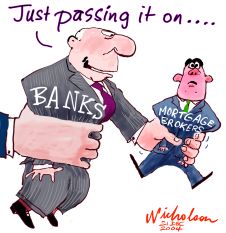
credit-crunch.jpgAS the Wall St Journal blog points out, Alan Greenspan has identified the true culprits in the current credit crunch.

…former Federal Reserve Chairman Alan Greenspan sharply criticized ratings agencies for their role in the current credit crisis. “People believed they knew what they were doing,” Mr. Greenspan says in today’s German newspaper. “And they don’t.”

Still, he doesn’t think it’s necessary to strengthen rating-agency regulation. Essentially, they’re “already regulated,” he says, because investors’ loss of trust means the agencies are likely to lose business. “There’s no point regulating this. The horse is out of the barn, as we like to say.” Greenspan also said he believes that the volume of structured-finance products will decrease. “What kept them in place is a belief on the part of those who invested in that, that they were properly priced. Now everyone knows that they weren’t. And they know that they can’t really be properly priced,” said Greenspan.

Well, that’s a point of view, certainly. That it was the rating agencies which fell down on the job is true, but there’s more to it than simple incompetence. It’s a matter of the incentives they face.

They are paid by the people issuing the bonds: so there’s always pressure not to open up the bonnet and have a good old poke around in the engine. If somehow a method could be devised for the buyers to be paying the agencies then there’d be a great deal more diligence in working out how such issues were structured.

Quite how this can be managed though is a rather more difficult problem.

Tim 

Share and Enjoy:
  • Digg
  • Sphinn
  • del.icio.us
  • Facebook